
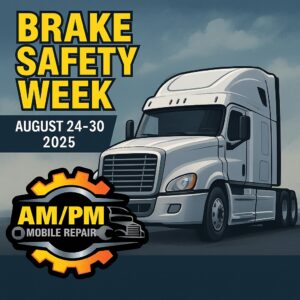
🚛 Get Roadcheck Ready: How to Prepare for CVSA Brake Safety Week 2025
August 24–30, 2025 | Focus: Brake Drum and Rotor Condition
Each year, the Commercial Vehicle Safety Alliance (CVSA) conducts Brake Safety Week, a North America-wide initiative aimed at improving brake safety awareness and enforcement. This year’s focus? The condition of brake drums and rotors, two of the most critical—and commonly overlooked—components of your air brake system.
If you’re a fleet manager, technician, or independent operator, here’s how to get prepared, stay compliant, and keep trucks rolling safely.
🔍 Why Brake Safety Week Matters
During this event, CVSA-certified inspectors will perform Level I and V roadside inspections with special attention to brake system components. Any commercial vehicle found with critical brake violations may be placed out of service immediately—resulting in downtime, fines, and CSA (Compliance, Safety, Accountability) score impacts.
🧰 2025 Inspection Focus: Drums and Rotors
This year, inspectors are zeroing in on the integrity and condition of brake drums and rotors. Here are specific items they’ll be looking for:
-
Cracked or broken rotors/drums
-
Rust that indicates inoperative brakes
-
Metal-to-metal contact (worn linings)
-
Grooves exposing center vents
-
Missing pieces or fractures in brake components
🔎 Tip: Surface rust is normal, but if rust covers the entire friction area, it may signal a seized or inoperative brake.
✅ Tips and Tricks to Prepare Your Fleet
1. Check Brake Stroke Length
-
Use chalk marks or stroke gauges to measure pushrod travel.
-
Match results to the FMCSA stroke limits for your brake chamber type.
-
Excessive stroke = automatic OOS (out of service).
2. Inspect Rotors and Drums Closely
-
Look for cracks, grooves, or signs of heat damage.
-
Check both inboard and outboard sides—don’t rely on a quick glance.
-
Replace any component that appears warped or structurally compromised.
3. Verify Lining Thickness
-
Minimum thickness:
-
1/4″ for drum brakes
-
1/8″ for disc brakes
-
-
Check for glazing, cracks, or oil contamination from wheel seals.
4. Air System Functionality
-
No audible leaks when brakes applied.
-
Compressor should cut-out around 125 psi.
-
Ensure low-air warning activates below 60 psi.
5. Wheel Seal and Hose Checks
-
Inspect for grease/oil leaks around hubs.
-
Air lines must be free from chafing, abrasion, or kinks.
🛠️ The Role of Fleet Maintenance
Proactive maintenance is your first line of defense. Here’s how fleet programs can support compliance:
🔄 Scheduled PMs:
-
Rotate inspections of brake hardware at every service interval.
-
Incorporate pushrod stroke measurement into preventive maintenance checklists.
📊 Maintenance Tracking:
-
Use digital logs or fleet software to record brake inspections, repairs, and adjustments.
-
Ensure that all repairs follow OEM and FMCSA guidelines.
👨🔧 Technician Training:
-
Brake inspections should only be done by qualified brake inspectors per FMCSA §396.25.
-
Train your staff on signs of rotor damage, adjustment procedures, and DOT recordkeeping.
🧾 Documentation:
-
Keep technician qualifications and inspection reports on file.
-
Verify that each vehicle has an up-to-date Annual DOT Inspection (required under §396.17).
🚨 Final Thoughts
With the spotlight on rotor and drum condition, now is the time to schedule fleet-wide inspections, address known issues, and train staff on the finer points of brake compliance. By focusing on the fundamentals—lining wear, pushrod stroke, rotor integrity, and air system reliability—you’ll not only pass inspection but ensure the safety of your drivers and the public.
For more information on Brake Safety Week and brake maintenance standards, visit:
🔗 www.operationairbrake.org
🔗 www.cvsa.org